
Why Does Your Car's Battery Keep Going Flat?
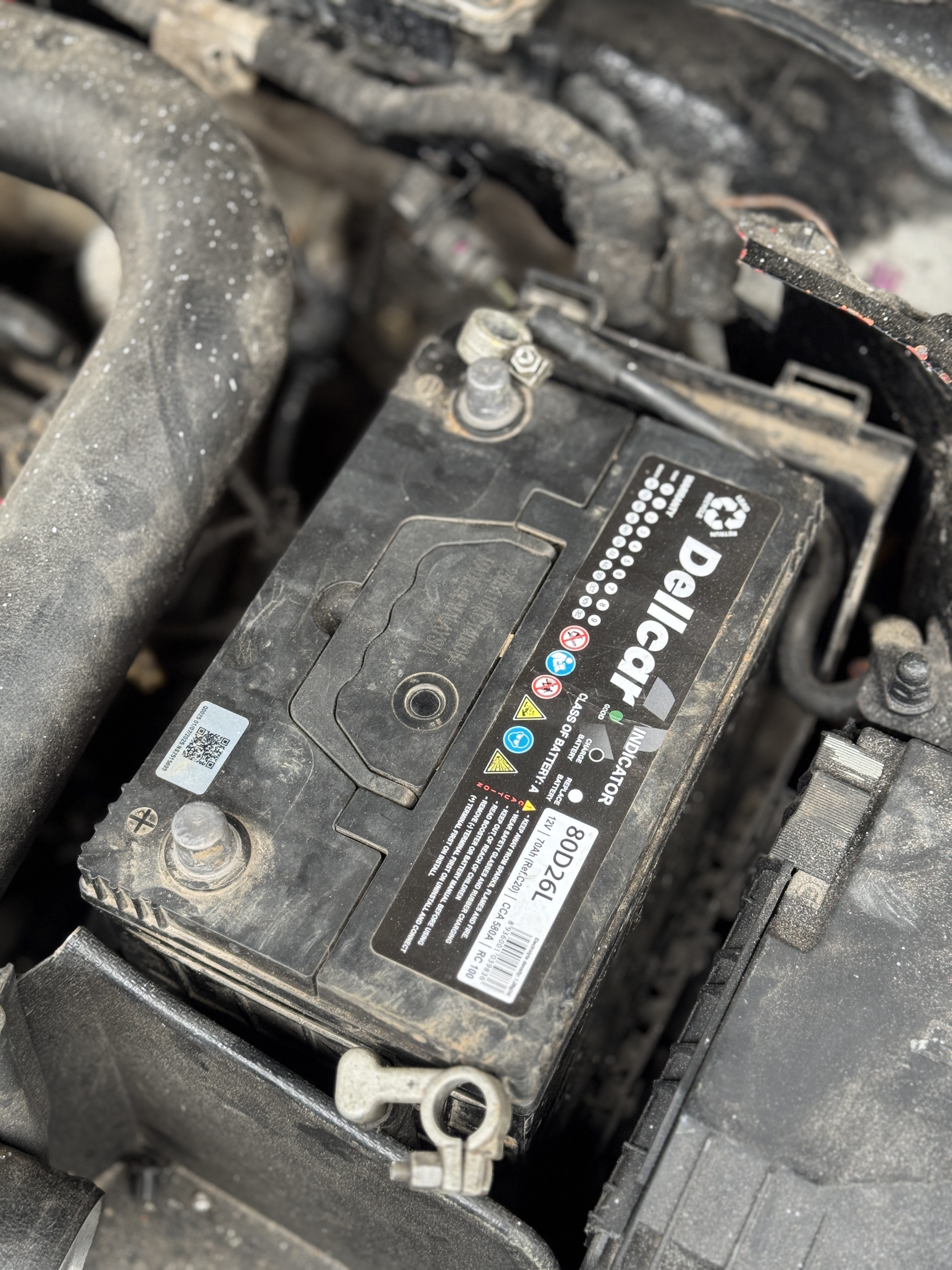
You come out to the car and get a weak click, or nothing at all. You jump it, drive around, and a few days later it happens again. Before you spend money on a new battery, it helps to know that a battery which keeps going flat is almost never random. It's telling you something, and the cause usually falls into one of three groups: something draining it while the car is off, a charging system that isn't doing its job, or a battery that's simply worn out.
1. Parasitic drain: the thief that works overnight
Even with the car locked and the key out, a small amount of power is always being used. The clock, the alarm and the computer memory all draw a little. That's normal. A healthy car settles down to about 50 milliamps or less once its modules go to sleep, which can take 20 to 30 minutes.
Trouble starts when something keeps drawing more than that. Common offenders are:
- A boot or glovebox light that stays on because the switch has failed
- Aftermarket alarms, stereos, dashcams and trackers wired straight to the battery
- A stuck relay
- A control module that never goes to sleep
- A fault in the alternator's diodes that leaks current backwards
A drain of just 300 milliamps can flatten a healthy battery in a few days. If your car goes flat after sitting for a couple of days but is fine when driven daily, suspect a drain first.
2. The charging system: using power without refilling it
The battery's job is mostly to start the engine. Once you're running, the alternator takes over, powering the car and topping the battery back up. If the alternator underperforms, you're slowly draining the battery every time you drive.
With the engine running, a multimeter across the battery terminals should read roughly 13.8 to 14.5 volts. If you see 12-point-something, the battery isn't being charged. Typical causes are worn alternator diodes or brushes, a slipping or glazed belt, and loose or corroded cables and earth straps. Warning signs include a flickering battery light, headlights that dim at idle, and a whining noise from the front of the engine.
3. The battery itself: age and habits
Most car batteries last three to five years, depending on climate and use. Heat is harder on them than cold. Over time the plates build up sulphation, a crust of lead sulphate that cuts how much charge the battery can hold, and it gets worse if the battery sits partly discharged.
Short trips make this worse. Starting the engine takes a lot of energy, and a ten-minute drive often doesn't put it all back. Do that for weeks and the battery sinks lower and lower. If your car mostly does school runs and quick errands, an occasional long drive, or a proper mains charger, will help a lot.
How to narrow it down at home
All you need is a basic multimeter:
1. Resting voltage: With the car off for a few hours, a healthy battery reads about 12.6V. Around 12.2V means roughly half charge, and below 12.0V is badly discharged.
2. Charging voltage: Start the engine and measure again. You want 13.8 to 14.5V.
3. Cranking voltage: Have someone start the car while you watch. If it drops below about 9.6V, the battery is weak.
4. Parasitic drain: Switch everything off, close the doors, and wait 20 to 30 minutes. Disconnect the negative terminal and put the meter, set to amps, in series between the cable and the terminal. Start on the highest range to avoid blowing the meter's fuse. If the reading is high, pull fuses one at a time until it drops. That points you to the faulty circuit.
Fix the cause, not just the symptom
The most common mistake is replacing the battery without finding out why it died. A new battery connected to a faulty alternator or a draining module will be flat again within weeks, and you'll have paid twice. Test first, find the cause, and then decide whether the battery really needs replacing.
If you've tested your own car, tell me in the comments what the meter showed. I'd like to hear what it turned out to be.